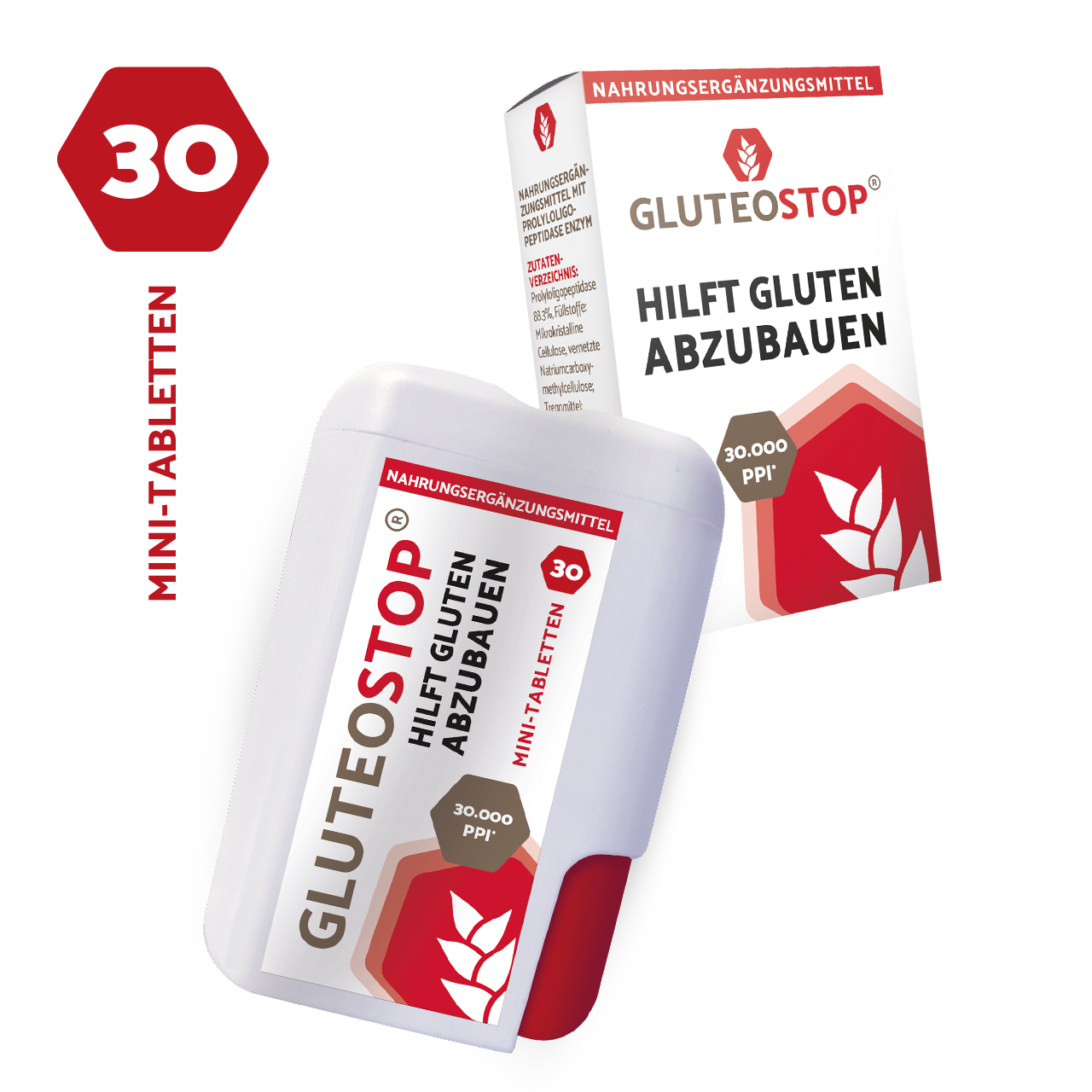
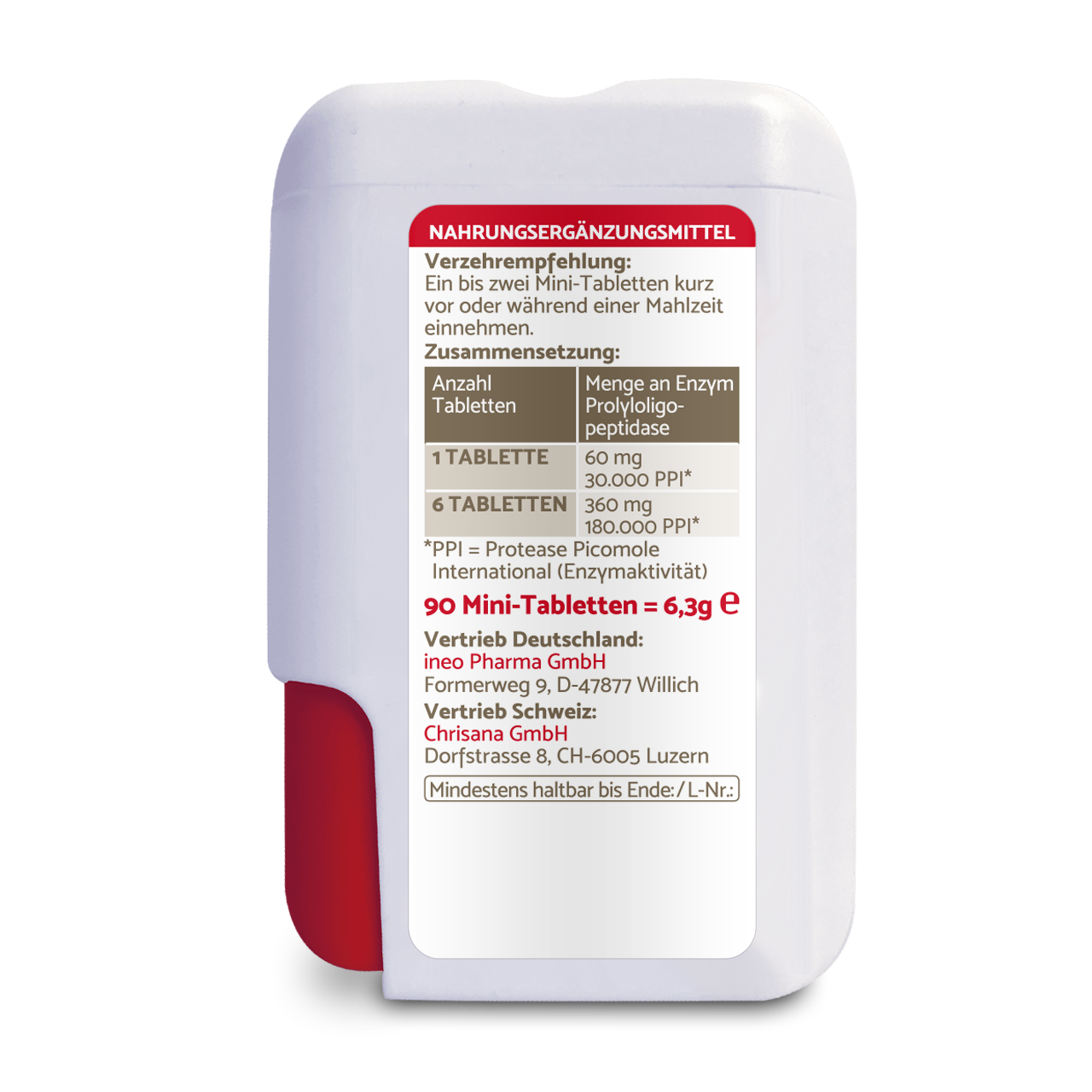
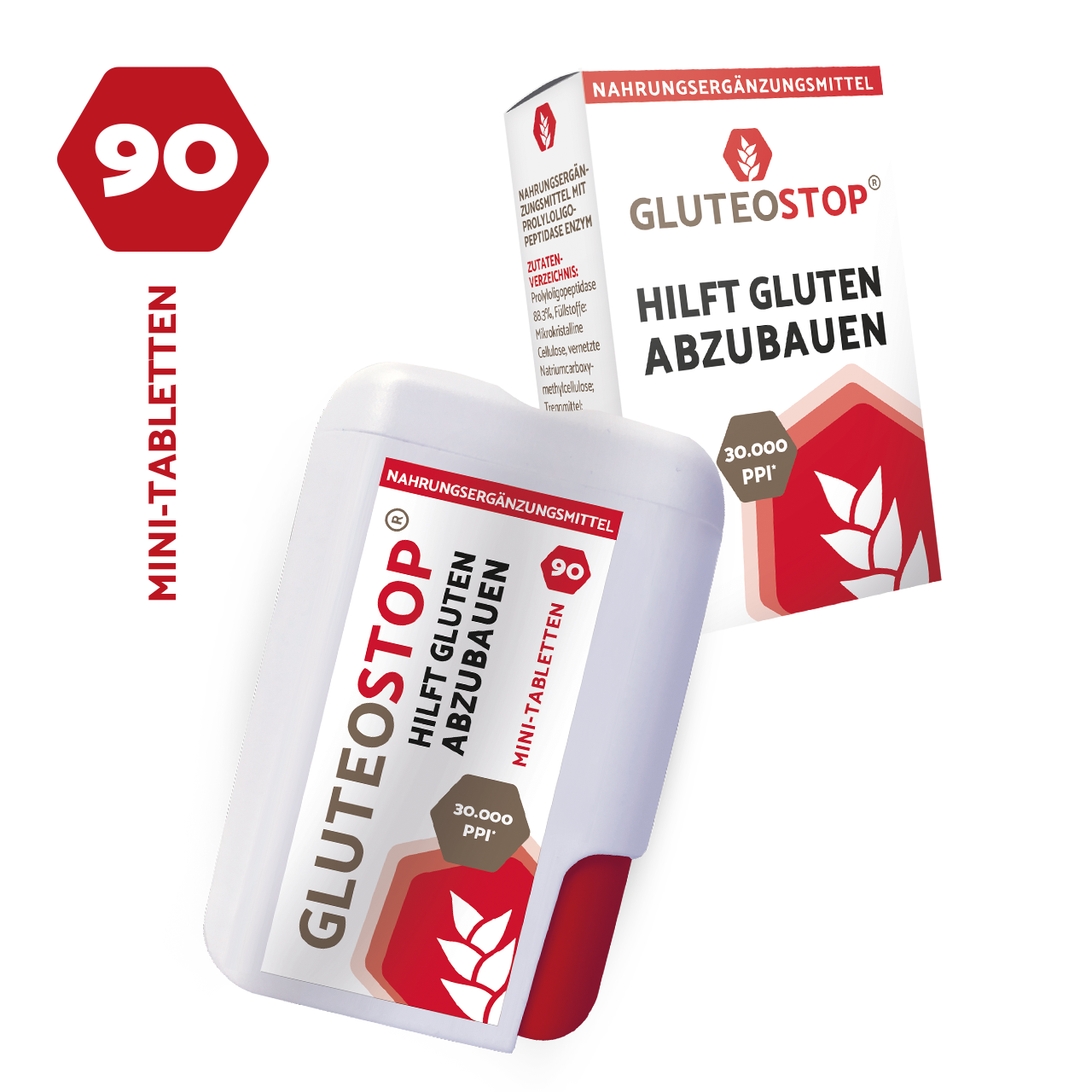
Convenient Dispenser

Convenient Dispenser

Easy to swallow

Easy to swallow

Discrete application

Discrete application

Vegan

Vegan

Inhalt 30 Stück(€0,57 each)

PZN: 14398555

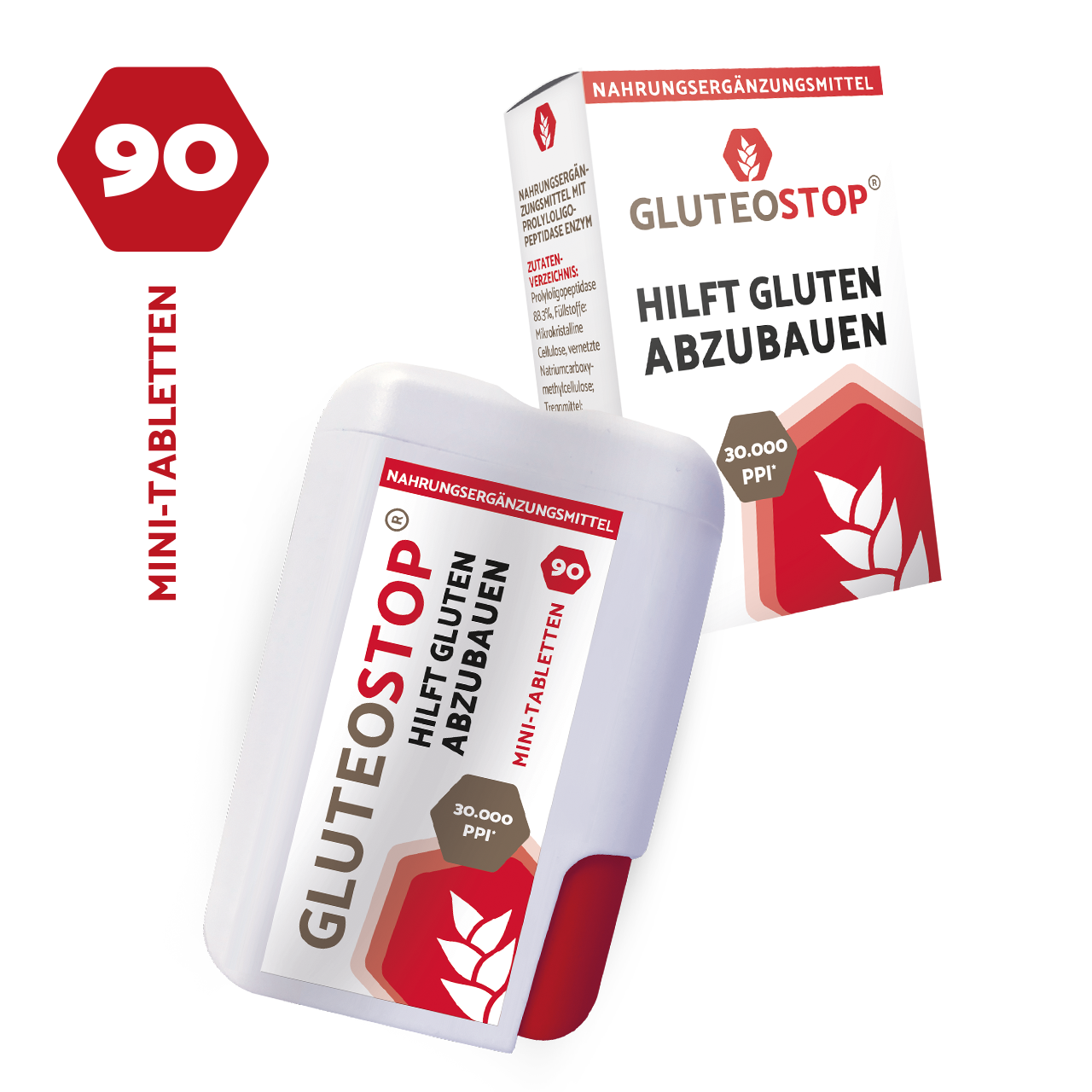
Inhalt 90 Stück(€0,37 each)

PZN: 14184771

Inhalt 180 Stück(€0,33 each)

PZN: 14184771

Inhalt 1080 Stück(€0,33 each)

PZN: 14359584

How does GluteoStop® work?

Immediately after ingestion, GluteoStop efficiently and quickly breaks down gluten into small fragments right in the stomach.

GluteoStop® contains a special enzyme, prolyl oligopeptidase, which breaks down the amino acid chains (peptides) in gluten. This allows gluten to be easily broken down. The enzyme used in GluteoStop® is the first protease enzyme to have been shown to be effective in clinical human studies. Comparative studies with other products on the market have shown that our enzyme digests gluten significantly more efficiently and breaks it down almost completely within a short time.

What are the symptoms of gluten sensitivity?

Symptoms often begin relatively quickly after consuming foods containing gluten and disappear just as quickly within a few days on a gluten-free diet. Those affected report abdominal pain, bloating, diarrhea or constipation, headaches, lightheadedness, fatigue, joint and muscle pain, skin changes, and depressive moods.

Do I Have GLUTEN SENSITIVITY?

Do you experience symptoms after eating, for example: bread, pasta, pizza, beer, or processed foods? Do you have no symptoms on a gluten-free diet? Can celiac disease and wheat allergy be ruled out?

If you can answer “YES” to all of these questions, then you may also be among the nearly 5.7 million people in Germany who suffer from gluten sensitivity. To date, there are no valid testing methods to diagnose gluten or wheat sensitivity. Currently, the diagnosis can only be made after ruling out celiac disease and a wheat or gluten allergy, and following clinical improvement on a gluten-free diet.

Frequently Asked Questions

Are there any clinical studies that demonstrate its effectiveness?

There are numerous clinical studies showing that gluten can be broken down by the prolyl oligopeptidase used. The enzyme used in GluteoStop® is the first commercially available protease enzyme to have proven effective in both in vitro studies and clinical human trials. Scientists at Maastricht University demonstrated in a randomized, placebo-controlled study that this enzyme was highly effective at breaking down gluten and that a large portion of the gluten was broken down in the stomach within a short period of time. We are happy to provide the relevant information to professionals in the field. Unfortunately, we are not legally permitted to provide study results to users without scientific or medical training.

Can people with celiac disease also use GluteoStop®?

GluteoStop® is gluten-free and can generally be used by people with celiac disease. For people with celiac disease, GluteoStop® is a useful, supplementary tool for further reducing daily, unintentional gluten intake while following a strict gluten-free diet. This requires the correct use of GluteoStop®. Many studies show that people with celiac disease unintentionally consume gluten despite following a strict gluten-free diet—an average of 150–400 mg per day. This leads to symptoms in many affected individuals.
IMPORTANT: GluteoStop® cannot replace a gluten-free diet and is not intended to treat or prevent celiac disease. GluteoStop® is a dietary supplement and is intended solely to functionally support the breakdown of gluten in a low-gluten diet.


Can children take GluteoStop®?

Since no clinical studies have yet been conducted on children, the European Commission approved the GluteoStop® AN-PEP enzyme in 2017 only for the general adult population. In the U.S. and Australia, however, a recommendation for the enzyme was issued for children aged 36 months and older, as these countries have different regulations governing the evaluation of dietary supplements.

GluteoStop® is a dietary supplement and is therefore subject to food law. As a general rule, food must be safe.For this reason, the safety of novel foods is assessed by the EFSA (European Food Safety Authority). The EFSA’s assessment drew on a wide variety of clinical studies and data. At that time, no studies involving children were available, so the EFSA was unable to make an assessment for children based on the submitted studies. Consequently, the enzyme used in GluteoStop® has, for the time being, been approved in Europe only for the adult population, and a maximum dose has been established, which would correspond to 50 GluteoStop® mini-tablets.


How should GluteoStop® be taken?

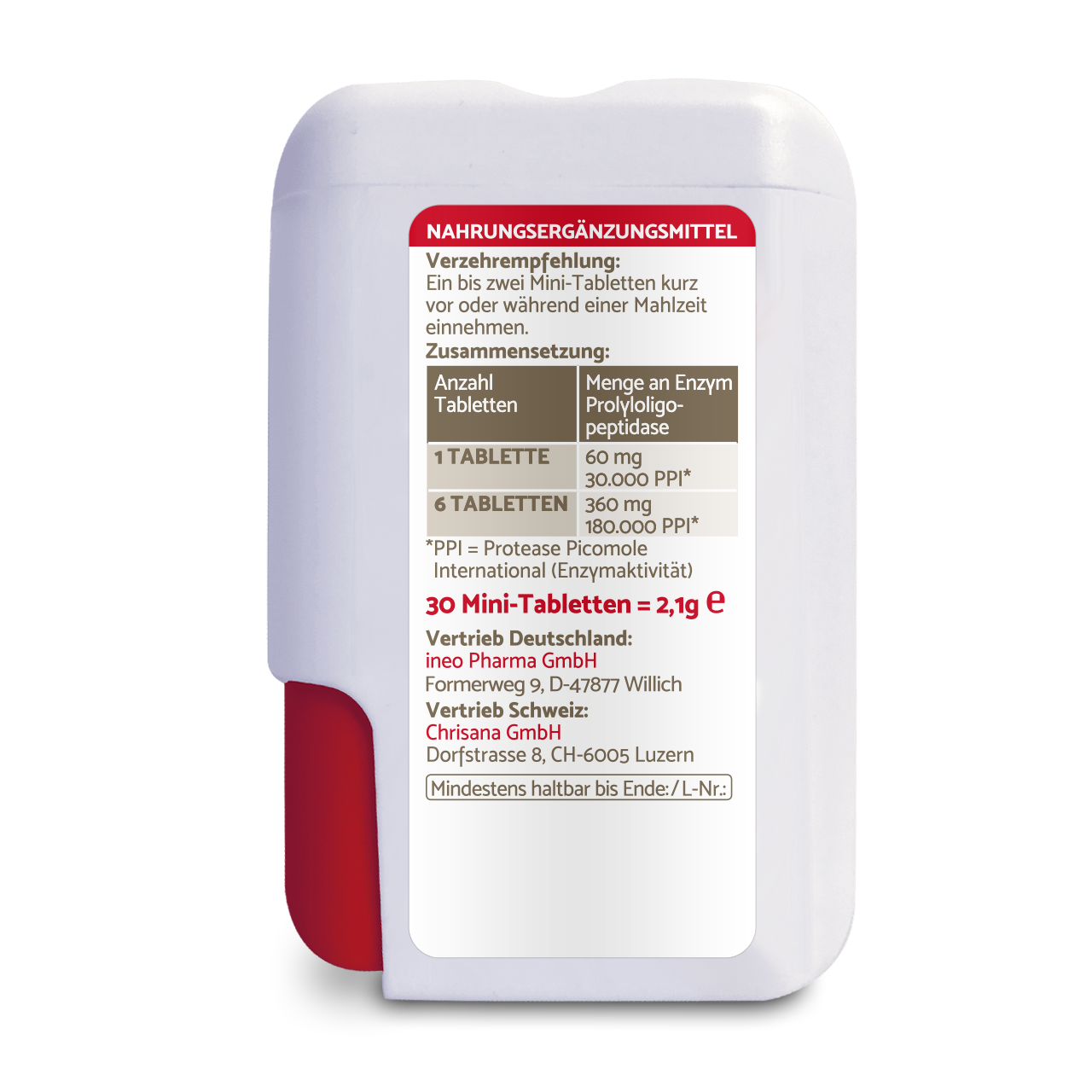
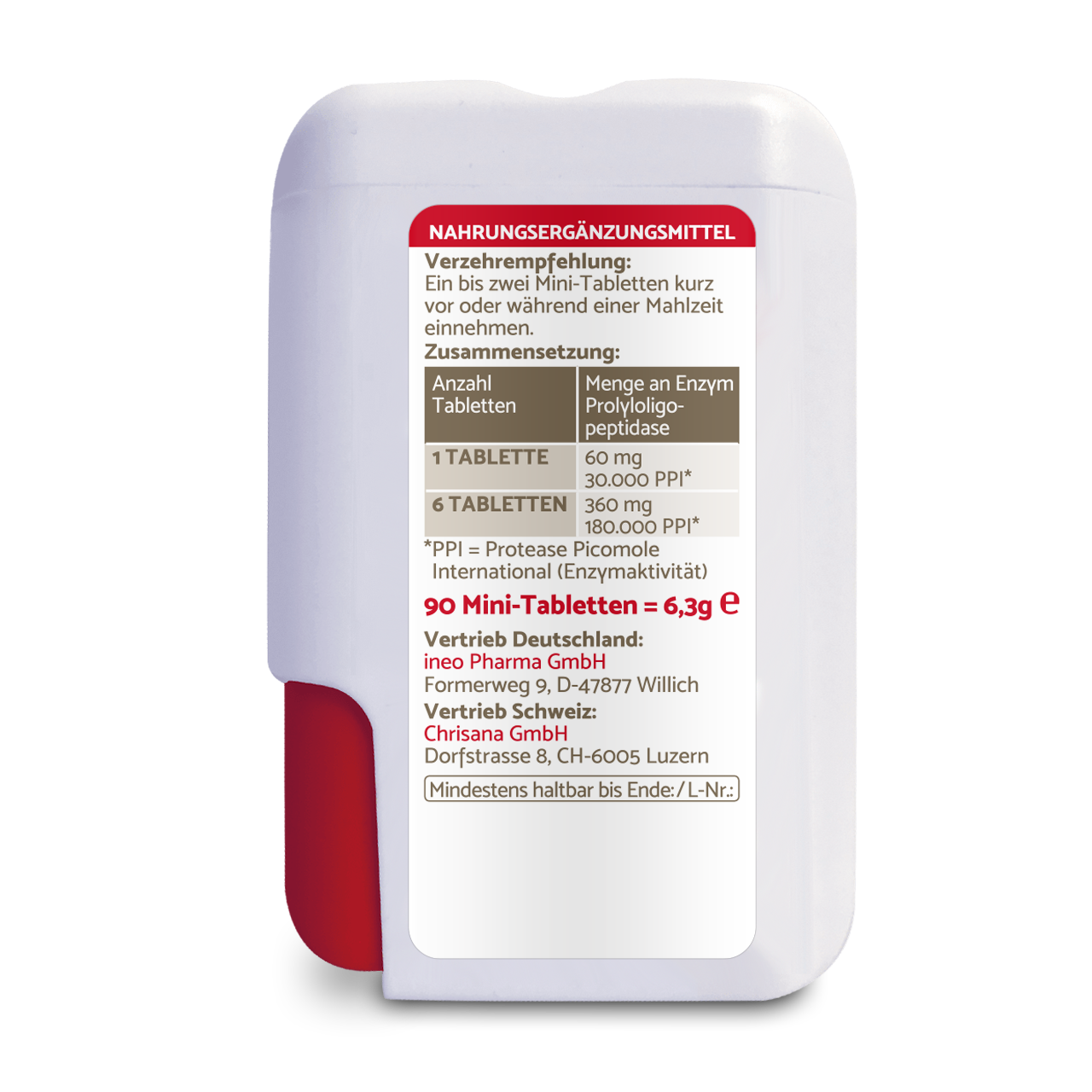
GluteoStop® should be taken immediately before a meal. The recommended dosage for GluteoStop® is at least two tablets per meal.

How much gluten can be broken down with one tablet?

Unfortunately, it is not possible to provide a single figure here, as the activity of the enzyme responsible for breaking down gluten depends heavily on the other components of the diet. The recommended dosage and enzyme content per tablet were determined based on the results of various clinical studies. The literature reports that the average unintentional intake of “hidden” gluten in a gluten-free diet ranges from 150 to 400 mg per day. In the most recent clinical study in humans, 500 mg of gluten was added to the participants’ standardized diet, and it was demonstrated that administering 83,300 PPI of the enzyme resulted in the breakdown of approximately 87% of the added gluten.


Is GluteoStop® also available by prescription?

Since GluteoStop® is a dietary supplement, it is generally not covered by public health insurance plans