


Most of us know someone who eats gluten-free or is perhaps thinking about going gluten-free - but is it just another health trend? Is it only for people with celiac disease? Or should we all remove gluten from our diet to support a healthy gut?
What is gluten and why could it harm my gut?
Gluten is one of the proteins found in cereal grains such as wheat, barley and rye. It is a sticky protein that helps give bread its elastic and airy texture. Gluten makes up a large part of the Western diet, and it is found in large quantities everywhere in bread, pasta, cakes and biscuits. However, more and more research shows that gluten can negatively affect the gut and health not only of people with celiac disease. This research points to an increase in the condition we now know as Non-Celiac Gluten Sensitivity (NCGS).1
Celiac disease is a lifelong autoimmune disease in which the small intestine becomes inflamed, the villi are damaged, and the intestine is therefore no longer able to absorb nutrients. This intestinal damage is triggered by a reaction to gluten. The disease means that gluten must be avoided 100% for life. However, the symptoms and intensity of the perceived reaction to gluten can vary greatly among different people with the disease. While some may not feel an immediate reaction to "gluten," there are other celiac sufferers who notice it immediately. Symptoms can range from immediate vomiting and intestinal pain to diarrhoea and extreme fatigue. In this case, it quickly becomes clear that avoiding gluten is the first step in managing this condition.2
What about those who don't have coeliac disease?
In people with non-celiac gluten sensitivity (NCGS), similar symptoms to celiac disease are very common: altered bowel movements, abdominal pain, bloating, discomfort and malabsorption – so-called intestinal symptoms.3 Some people also suffer from symptoms outside the gut (extra-intestinal symptoms), including skin problems, behavioural disorders, poor concentration, fatigue, headaches and migraines.
But why does gluten cause a reaction in these people? Well, we know that this small protein can increase the permeability of the gut. This means that the tight junctions between the intestinal cells lining the digestive tract can become looser, allowing large particles such as toxins, undigested food and pathogenic organisms to pass through the intestinal barrier and enter the bloodstream. Research has shown that gluten can increase the release of zonulin, a substance that can activate intestinal permeability by loosening the "tight junctions" in the intestinal wall.4
Normally, these "tight junctions" only allow certain substances to pass through, such as properly broken down macro- and micronutrients from our food. However, if the gut becomes more "permeable," larger particles can penetrate the intestinal wall - which can cause a variety of symptoms and health problems, including food intolerances.
Given that so many of us eat a lot of gluten, the "leaky gut syndrome" hypothesis could help explain why so many of us are becoming increasingly sensitive to gluten. If our body shows increased intestinal permeability, this can also trigger an increase in inflammation in the intestinal wall, which can cause symptoms outside the gut (extra-intestinal) as well as within the digestive system (intestinal).
For example, research has shown that there are many different health problems associated with increased intestinal permeability, including skin and thyroid diseases, irritable bowel syndrome and altered bowel movements, joint pain, headaches and neurological symptoms such as depression and anxiety.5
Research also links intestinal permeability to an increased risk of autoimmune diseases, in which the body begins to react to its own cells and sees them as an immunological threat.6 Autoimmune diseases can affect any part of the body, including the thyroid gland (Hashimoto's and Graves' disease), joints (rheumatoid arthritis) and skin, in conditions such as psoriasis and eczema.
There is even extensive evidence that "leaky gut syndrome" is one of the main causes of type 1 diabetes. These are chronic autoimmune diseases that can have a major impact on a person's life, both psychologically and physiologically. That's why we should understand as much as possible about gut health and its role in prevention and overall health and well-being. This begins with understanding exactly what your body is reacting to when you feel unwell.
Is it just the gluten I'm reacting to?
While gut permeability (leaky gut syndrome) is often exacerbated by gluten, it's important to remember that some people don't just react to the gluten in grain products. For example, bread contains a high proportion of wheat and although wheat contains a lot of gluten, there are also people who have a wheat allergy or react to other proteins (e.g. ATIs) in grain, apart from gluten.
Bread absorbs a lot of water and although you may not have an immune reaction to gluten or even have problems with a leaky gut, it may simply be that too much bread in your diet makes you feel bloated, uncomfortable and possibly constipated. In this case, it may be worth experimenting with simply reducing the amount of bread you eat. Testing and learning is a path we all have to take when it comes to optimising gut health: you have to find out what and how much of which substance and food you can tolerate.
What do I need to consider when following a gluten-free diet?
If you love your bread, pasta, cakes and pastries, then the thought of a gluten-free diet may seem daunting. However, nowadays a gluten-free diet is much easier, given the huge variety of alternative grains and the extensive range of gluten-free products. Remember: just because something is gluten-free doesn't mean it's healthy! A gluten-free cake is still full of sugar and often baked with low-fibre white flours, which are also not good for your gut health if consumed regularly in large quantities.
It is possible to eat gluten-free in a healthy way without having to break the bank or feel stressed in the kitchen trying to recreate all your usual dishes gluten-free. If you want to experiment with a completely gluten-free diet, here are some first steps to consider:
1) Choose natural, unrefined gluten-free grains and carbohydrates such as potatoes, brown rice, buckwheat, millet, lentils, legumes, quinoa, sweet potatoes, nut flour products and gluten-free wholemeal flours and pasta.
2) Avoid very refined and processed gluten-free products - look for foods that contain only a few and, above all, natural ingredients. Also avoid products with a high proportion of corn or corn starch, as their carbohydrates are released quickly and can also have a negative effect on your gut health and the balance of the intestinal flora. All natural fibre sources such as seeds (flax or hemp seeds), nuts, psyllium husks and almost all vegetables provide good support for the gut.
3) If you have been diagnosed with coeliac disease, you should avoid gluten for life. If you do not have coeliac disease and would like to try a gluten-free diet, choose a period of at least 2 to 3 weeks to completely exclude gluten. This is usually enough time to determine whether it makes a difference to the symptoms you experience. However, if you suffer from an autoimmune disease, alternative practitioners generally advise you to prioritise supporting your gut health. In certain cases, this may mean avoiding gluten for life, but ultimately you need to find out what works best for you and what makes you feel good.
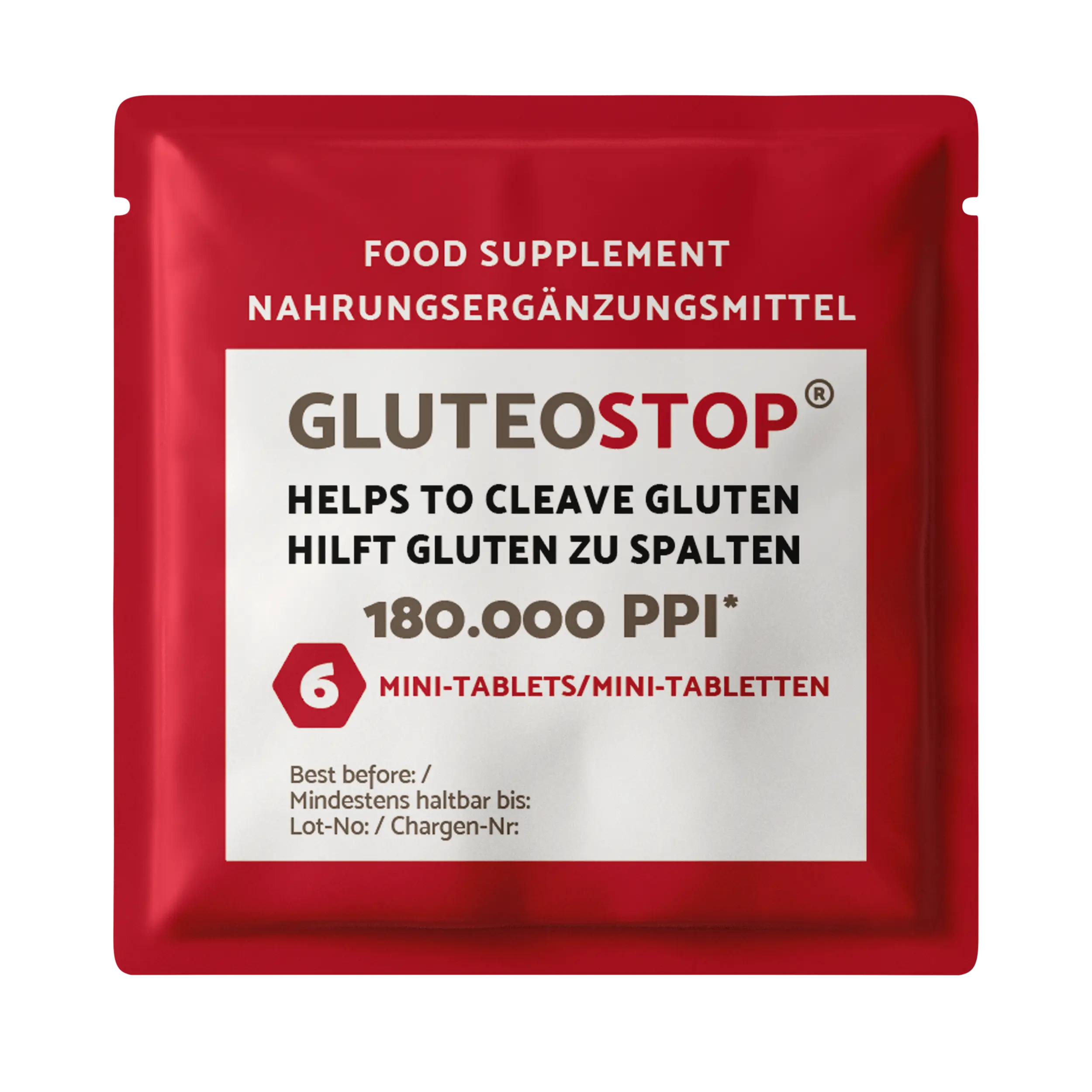
To further reduce gluten intake, gluten-digesting enzymes can also be used as a supplement. One of the best-known enzymes is the so-called AN-PEP enzyme. This is used both in the food industry, for example to produce gluten-free beer, and as an ingredient in dietary supplements to support a gluten-free diet. Especially for people with celiac disease who have to live absolutely gluten-free, these products are a recommended support for their strict gluten-free diet to reduce the burden of unintentionally ingested gluten, e.g. from contaminated food. People with non-celiac gluten sensitivity (NCGS) also benefit from the use of AN-PEP enzymes due to a reduced burden of gluten on the gut.
If you would like to read more about the benefits of AN-PEP enzymes and find more information on how gluten sensitivity manifests itself, select GLUTEN SENSITIVITY in the menu bar above.
References:
1Non-Celiac Gluten Sensitivity, Beyond Celiac
2Bischoff, S, Barbara, G, Buurman, W, Ockhuizen, T, Schulzke, J, Serino, M, Tilg, H, Watson, A and Wells, J (2014). Intestinal permeability - a new target for disease prevention and therapy, BMC Gastroenterology
3Campbell, A (2014). Autoimmunity and the Gut, Autoimmune Diseases
4Gluten sensitivity, Coeliac UK
5The gluten free diet, Coeliac UK
6Alessio Fasano (2012). Intestinal Permeability and its Regulation by Zonulin: Diagnostic and Therapeutic Implications, Clinical Gastroenterology and Hepatology


Share:
7 Differences: Celiac Disease & Gluten Sensitivity
Gluten Sensitivity: Differences from Celiac Disease, Symptoms & Tips