

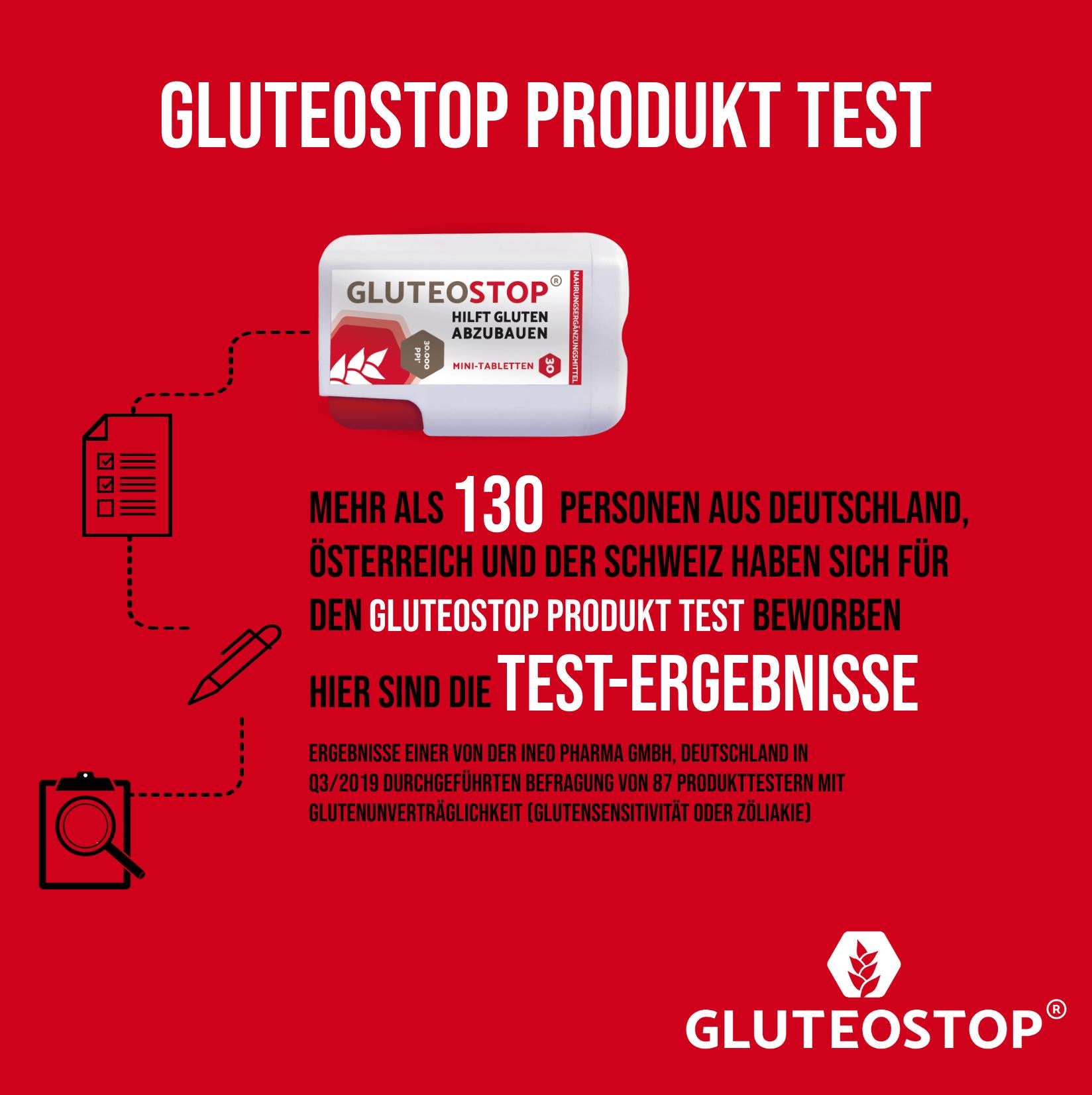
We asked ourselves, how is GluteoStop® perceived by you? Where can GluteoStop® best help you, and what experiences have you had with unintentional gluten intake? Our current product test provides answers to these and other questions.
First things first: GluteoStop® has helped you a lot: 9 out of 10 participants who tested GluteoStop® over a longer period would recommend GluteoStop®. We asked the participants of the big GluteoStop® test campaign these 10 questions:
1) How long have you been eating gluten-free?
2) Did GluteoStop® help you?
3) Would you recommend GluteoStop®?
4) Do you find GluteoStop® practical?
5) How often do you unintentionally ingest gluten each year?
6) Have you ever had so-called "gluten accidents"?
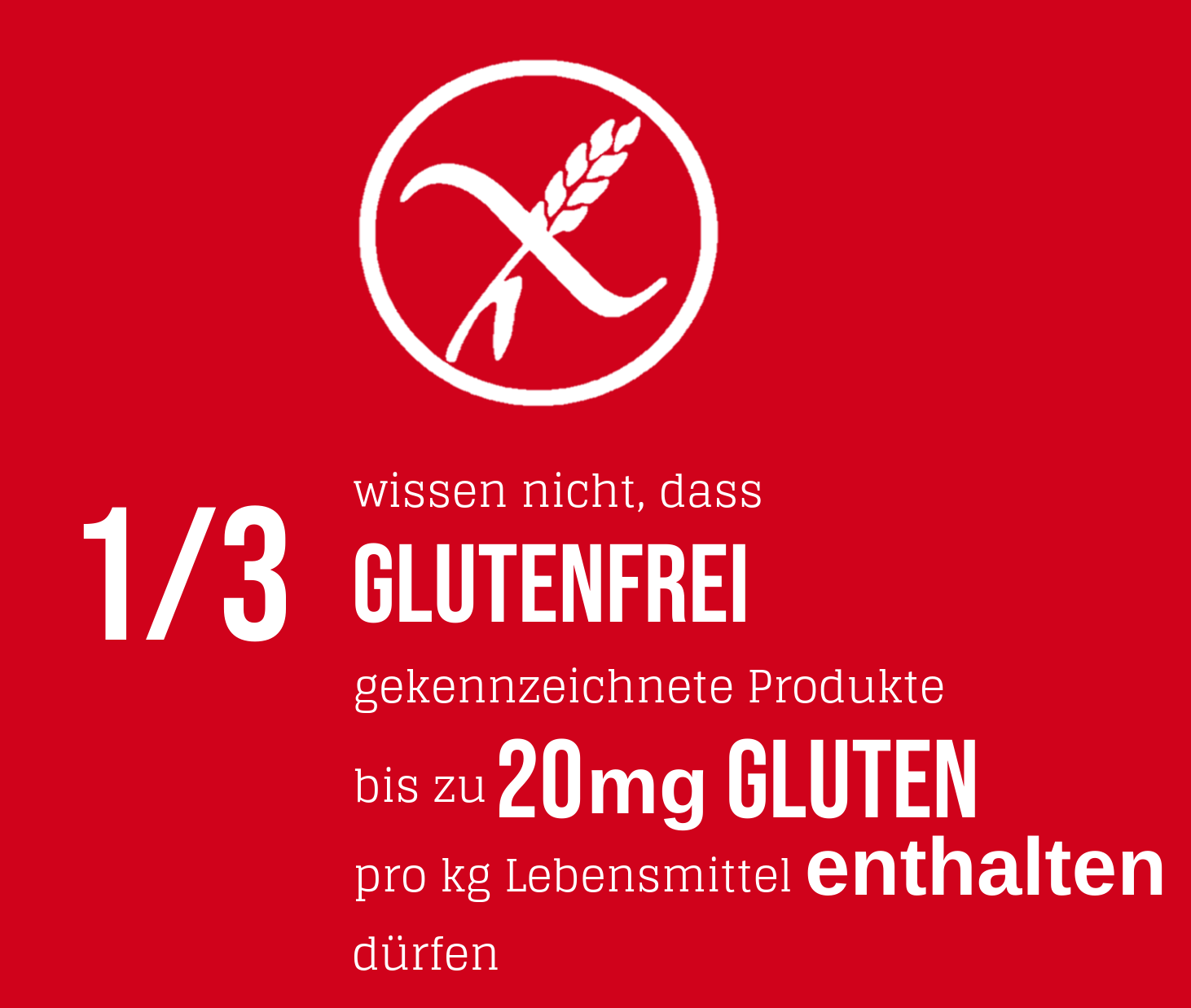
7) Did you know that even products labeled gluten-free (e.g., with the crossed-out ear of wheat from the DZG) are still allowed to contain up to 20 mg of gluten per kg of food?
8) Have you recently declined invitations to eat out because you were concerned whether the food would be gluten-free?
9) In what situation were you glad to have GluteoStop® with you?
10) Would you buy GluteoStop®?
But let's start from the beginning. In October 2019, ineo Pharma GmbH launched the test campaign for us. Participants from Germany, Austria, and Switzerland could apply for a free test package on the GluteoStop® homepage. The only requirements for participation were being of legal age and suffering from gluten sensitivity or celiac disease. After the testing phase, participants were invited to complete a questionnaire to report on their experiences with GluteoStop®. At the end of 2019, the data was evaluated. The data was analyzed for all participants as well as separately for participants with gluten sensitivity and celiac disease.
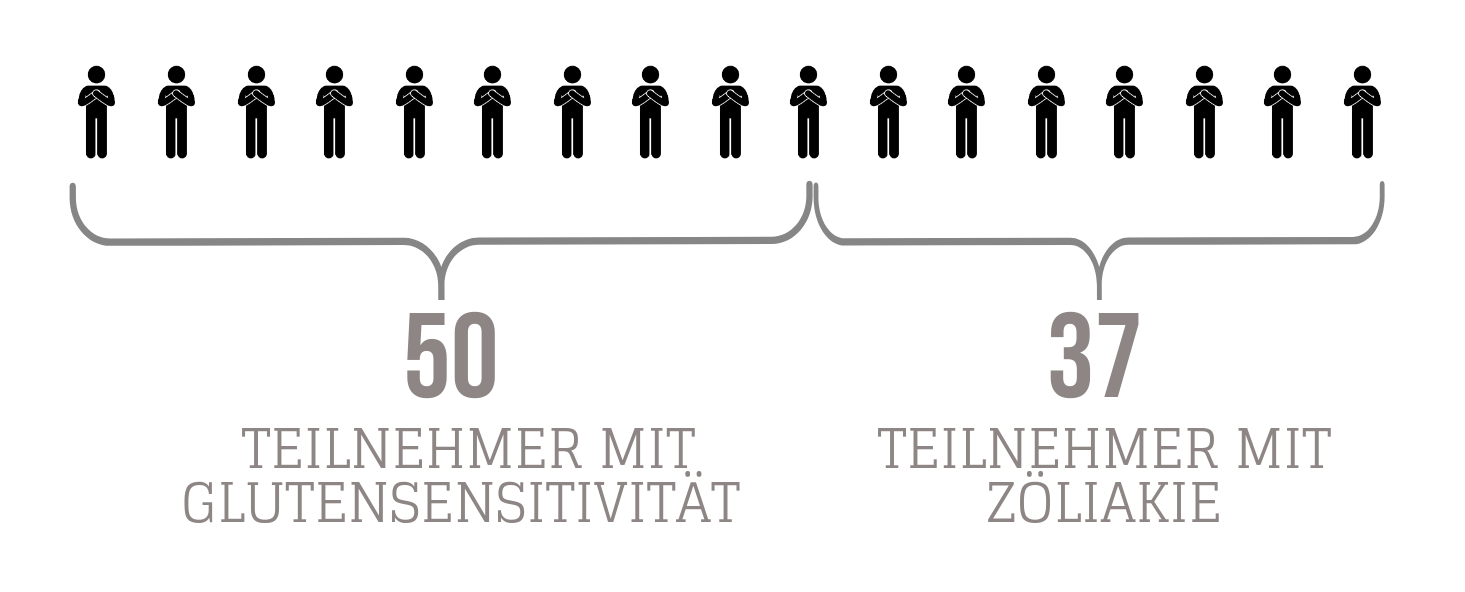
Over 130 people applied for our test. 87 participants met the participation criteria and completed the questionnaire. 50 participants stated they were gluten-sensitive, and 37 were affected by celiac disease.
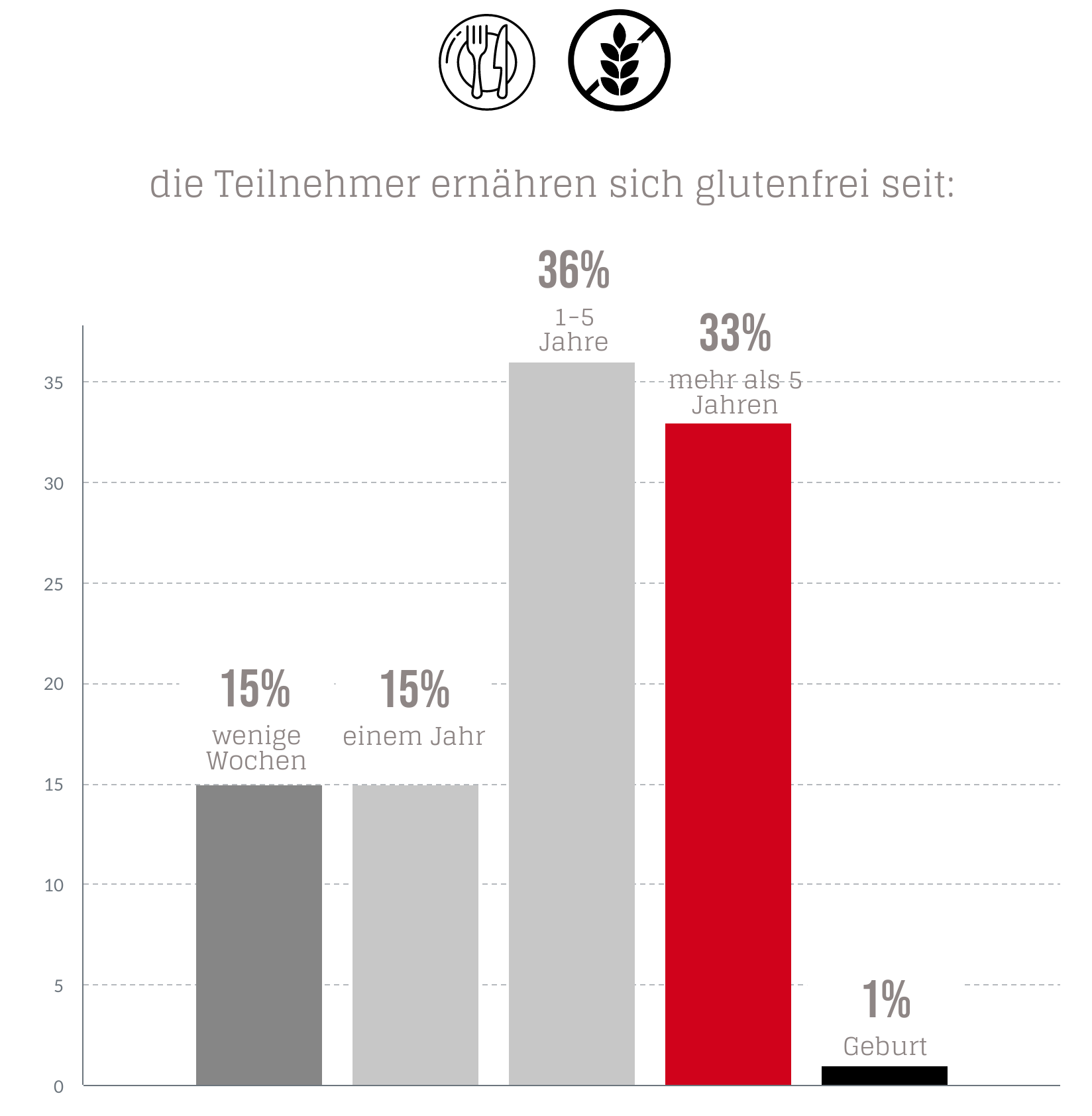
1) How long have you been eating gluten-free?
70% of participants had been eating gluten-free for more than a year. Comparing the results of the two participant groups, it was found that the majority of gluten-sensitive individuals (38%) had been eating gluten-free for one to five years, whereas the majority of celiac disease sufferers (41%) had been following a gluten-free diet for more than 5 years.
2) Did GluteoStop® help you?
We were particularly pleased that 92% of participants stated that GluteoStop® had helped them. This was confirmed by participants with celiac disease and gluten sensitivity alike.

3) Would you recommend GluteoStop®?
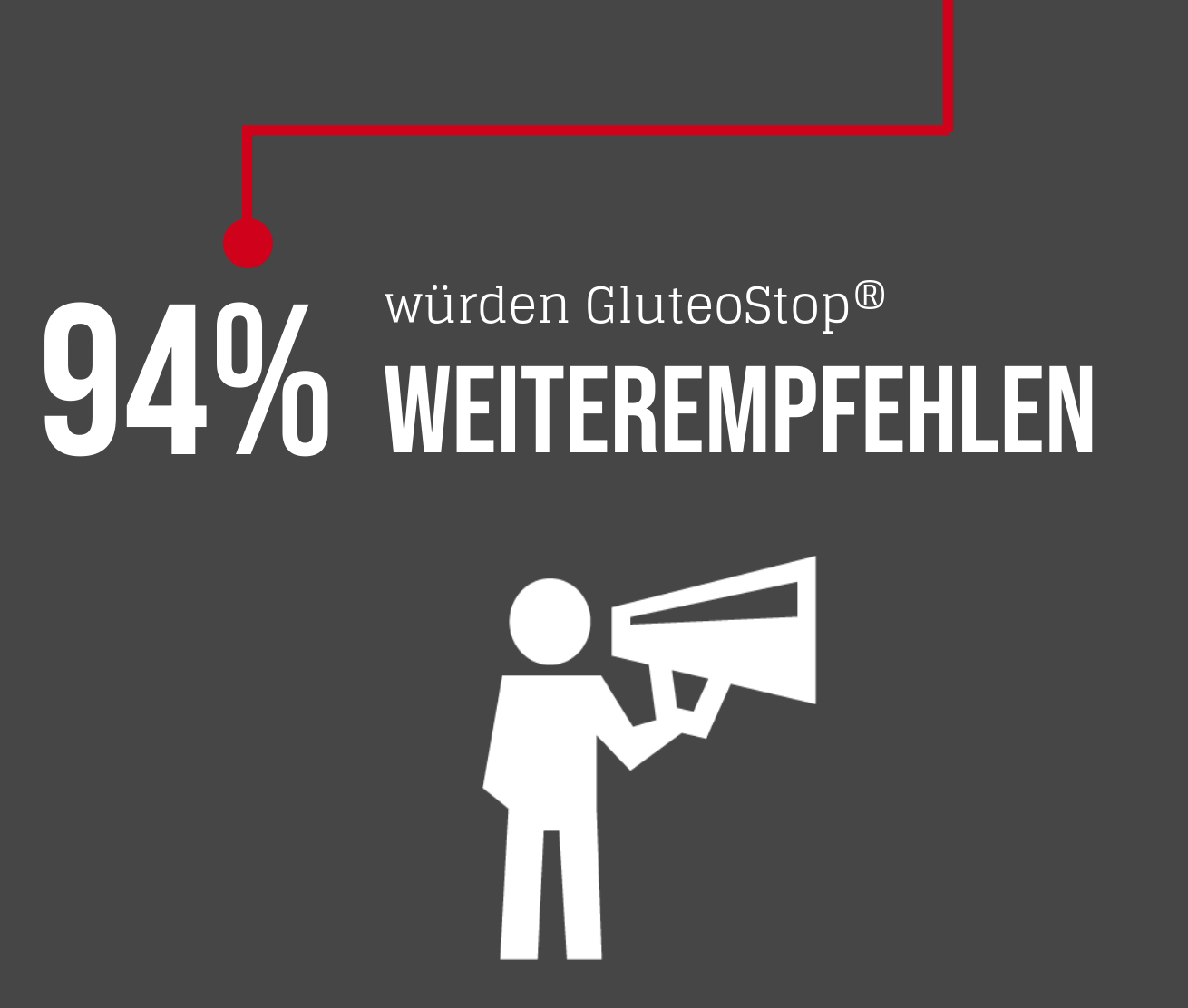
Even more impressive was the result of the question whether product testers would recommend GluteoStop®. The result is overwhelming and strengthens our belief that with GluteoStop®, we have developed an effective aid that can support people with gluten intolerance. 94% of all participants would recommend GluteoStop®. Among those with celiac disease, it was even 95%. Giving a recommendation is an act of trust and is based on subjective experience and evaluation. Trust is the basic prerequisite of any human relationship. Trust in a product cannot be bought; it must be earned.
4) Do you find GluteoStop® practical?
Our goal in developing GluteoStop® was to create a product that can be used anytime and anywhere. For many sufferers, a gluten-free diet is easy to implement at home, as everything is under their own control. As soon as you leave your own four walls, it becomes difficult, and you are dependent on other people and their knowledge regarding gluten-free eating and preparation. Therefore, it was important to us to design a product that could be easily used, especially when on the go. The tablets should be kept as small as possible so that they can be taken without water. The dosage should also be very easy. And finally, the use of GluteoStop® should be as discreet and inconspicuous as possible so that you don't have to expose yourself to unnecessary questions or strange looks. So that GluteoStop® can always be carried with you, the packaging should fit into any handbag or pocket.
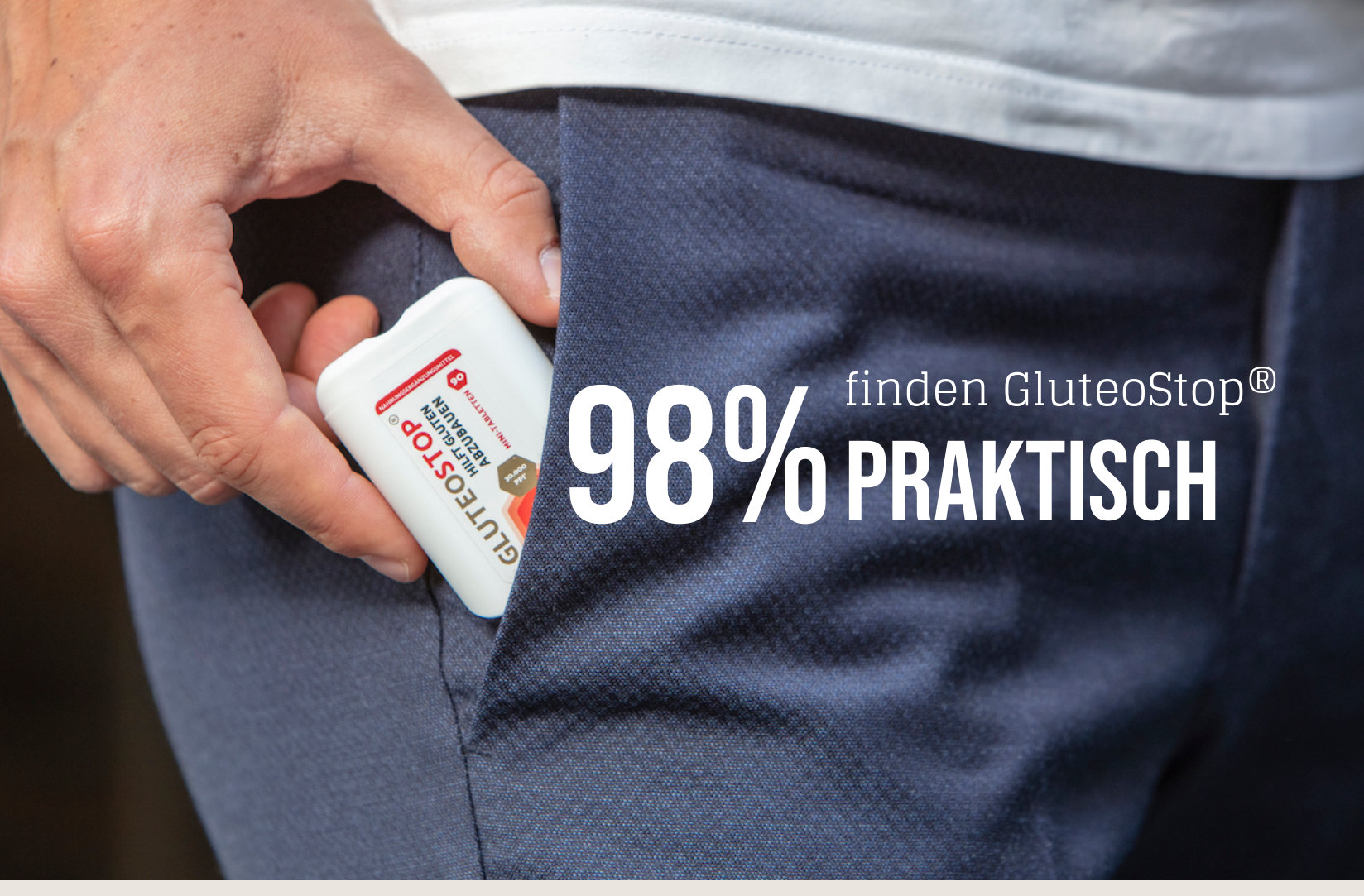
The testers confirmed that we were right about this. 98% of all test participants found GluteoStop® practical.
5) How often do you unintentionally ingest gluten each year?
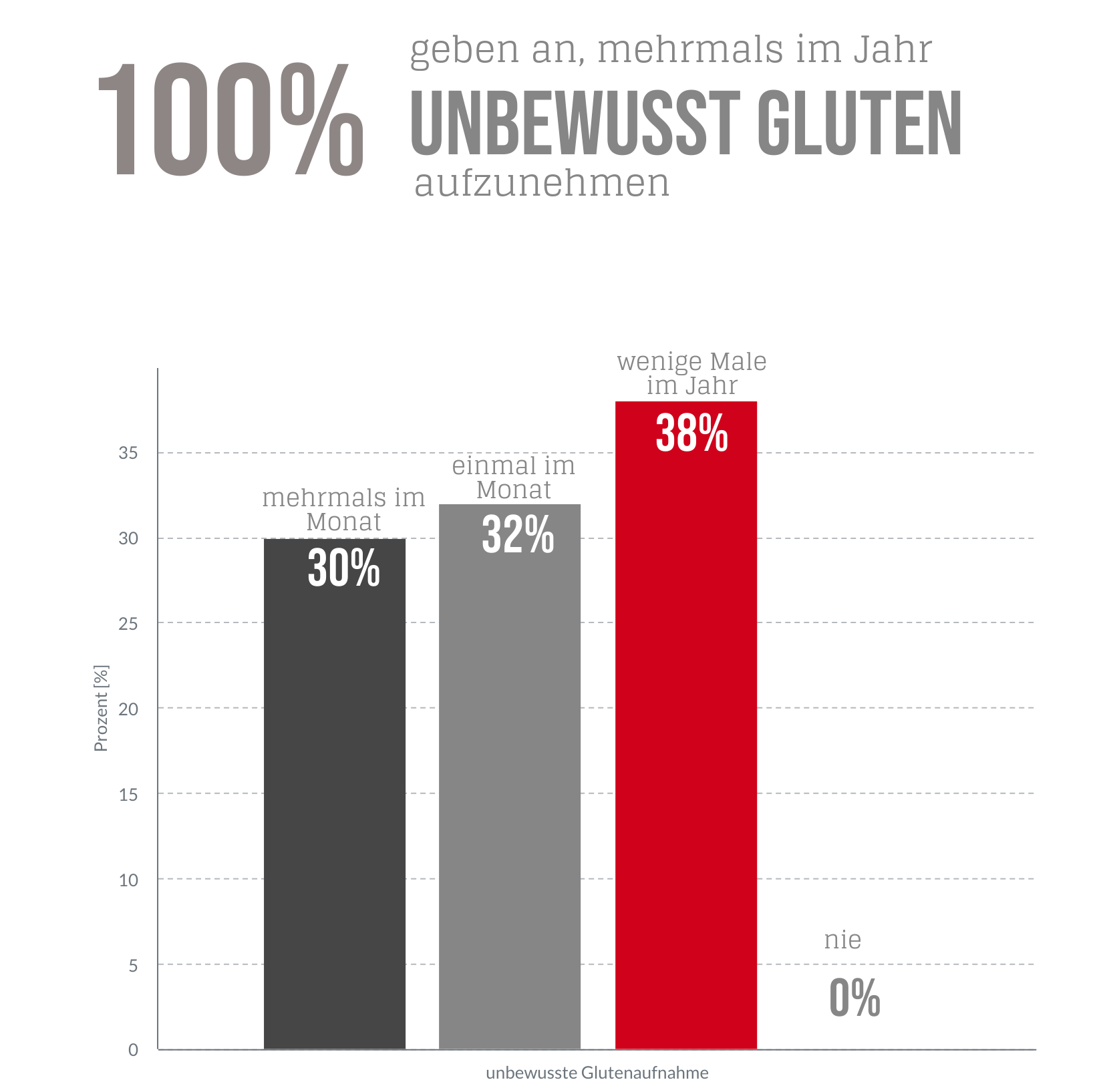
We wanted to know from the study participants what experiences they had with unconscious gluten exposure. Recent scientific studies have found that even celiac disease sufferers who were convinced they were eating a strictly gluten-free diet unknowingly ingest an average of 150-400 mg of gluten daily (Syage et al, Am J Clin Nutr. 2018). All participants in our GluteoStop® product test also stated that they unknowingly ingested gluten several times a year. For more than a third of gluten-sensitive individuals, unintentional gluten intake even occurred several times a month. These data underscore the need to provide sufferers with aids like GluteoStop® to reduce the consequences of unintentional, unconscious gluten intake.
6) Have you ever had so-called "gluten accidents"?
Despite all precautions, unintentional gluten intake can occur. Most individuals with gluten intolerance react with the same symptoms as before their diagnosis. Abdominal pain, diarrhea, stomach cramps, etc. But headaches, dizziness, nausea, or skin reactions can also be signs of a gluten accident. Not everyone reacts at the same speed. The intensity can also vary, sometimes more severe, sometimes less severe, sometimes longer, sometimes shorter. The reaction to a gluten accident is very individual. The time span from unintentional gluten intake to the onset of the reaction also varies greatly. For some, reactions can occur within a few hours, but also only two to three days later. The time it takes for the reactions to subside can vary accordingly. For some, it may be over within a few hours, but the effects can also be felt for up to a week or even longer.
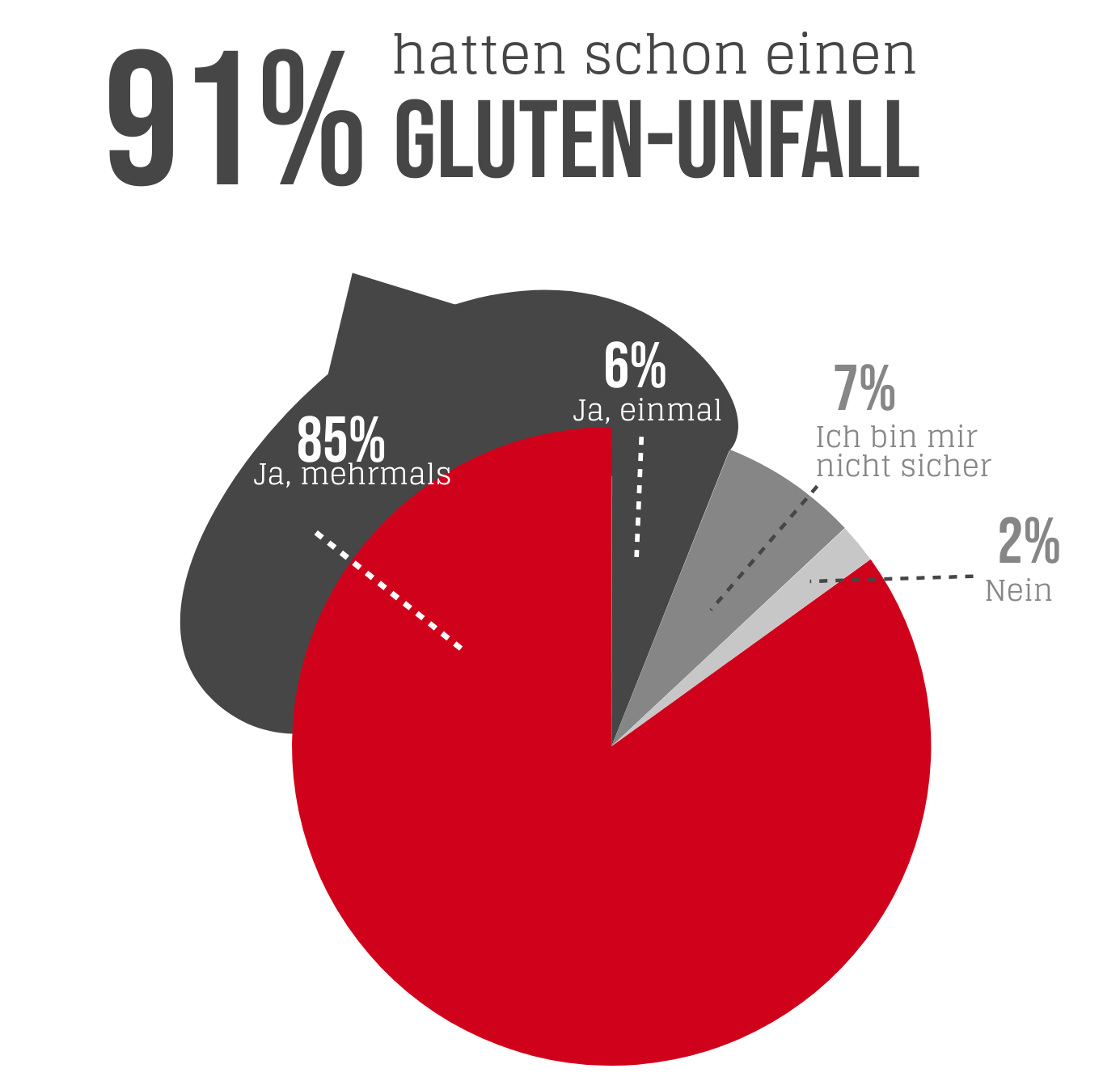
91% of all subjects are familiar with such gluten accidents. In the group of celiac disease sufferers, it was even 98% of participants, 95% of whom stated that they had had several gluten accidents. We developed GluteoStop® to mitigate such gluten accidents.
7) Did you know that even products labeled gluten-free (e.g., with the crossed-out ear of wheat from the DZG) are still allowed to contain up to 20 mg of gluten per kg of food?
We were particularly surprised by the result of the question regarding the permitted amounts of gluten in products labeled as "gluten-free." More than a third of the participants stated that they did not know that products labeled "gluten-free" or with the "crossed-out ear of wheat" symbol may still contain up to 20 mg per kg of food according to European food law. In the group of celiac disease sufferers, 38% were not even aware of this limit. There is certainly still a lot of education needed here. Some people like to claim that there is no "hidden gluten." We do not share this opinion, and that is why we developed GluteoStop®. As our survey showed, a large proportion of participants did not know that even in gluten-free labeled products, up to 20 mg of gluten per kg of food may still be present. Products that are gluten-reduced but still contain 100 mg of gluten per kg may be advertised by the food industry as products with "very low gluten content" and may even bear the notice "Suitable for people with gluten intolerance" or "Suitable for people with celiac disease." Many renowned scientists are convinced that such a large amount of gluten leads to damage to the intestinal lining in sensitive groups of people. In celiac disease sufferers, an inflammatory reaction certainly occurs.
Interestingly, various countries, including Australia and New Zealand, have taken a different approach to labeling requirements. Here, products can only be labeled "gluten-free" if no gluten can be analytically detected. The detection limit is currently around 3 mg of gluten per kg of food, almost 10 times lower than the limit in Germany.
By "hidden gluten," in addition to the residual gluten described above, we also mean gluten that enters food through contamination. Studies by, for example, the food surveillance in Baden-Württemberg in 2018 showed that in 10% of samples of packaged products and even in 36% of samples of unpackaged products, gluten could be detected at more than 80 mg per kg of food. Only samples that did not contain any indications of gluten in the labeling were examined.
8) Have you recently declined invitations to eat out because you were concerned whether the food would be gluten-free?
It is not surprising that a large proportion of participants, all of whom suffer from gluten intolerance, have already declined invitations to eat out due to fear of gluten. In the group of celiac disease sufferers, 59% even stated that they had recently canceled invitations. Due to the severity of gluten intolerance and the effects of unconscious gluten intake, it is not surprising that almost two-thirds are uncertain here.
This can lead to social exclusion and a reduction in the quality of life. With GluteoStop®, we want to help those affected and provide them with a tool that can break down traces of gluten and thus further reduce the unconscious exposure to gluten.
9) In what situation were you glad to have GluteoStop® with you?
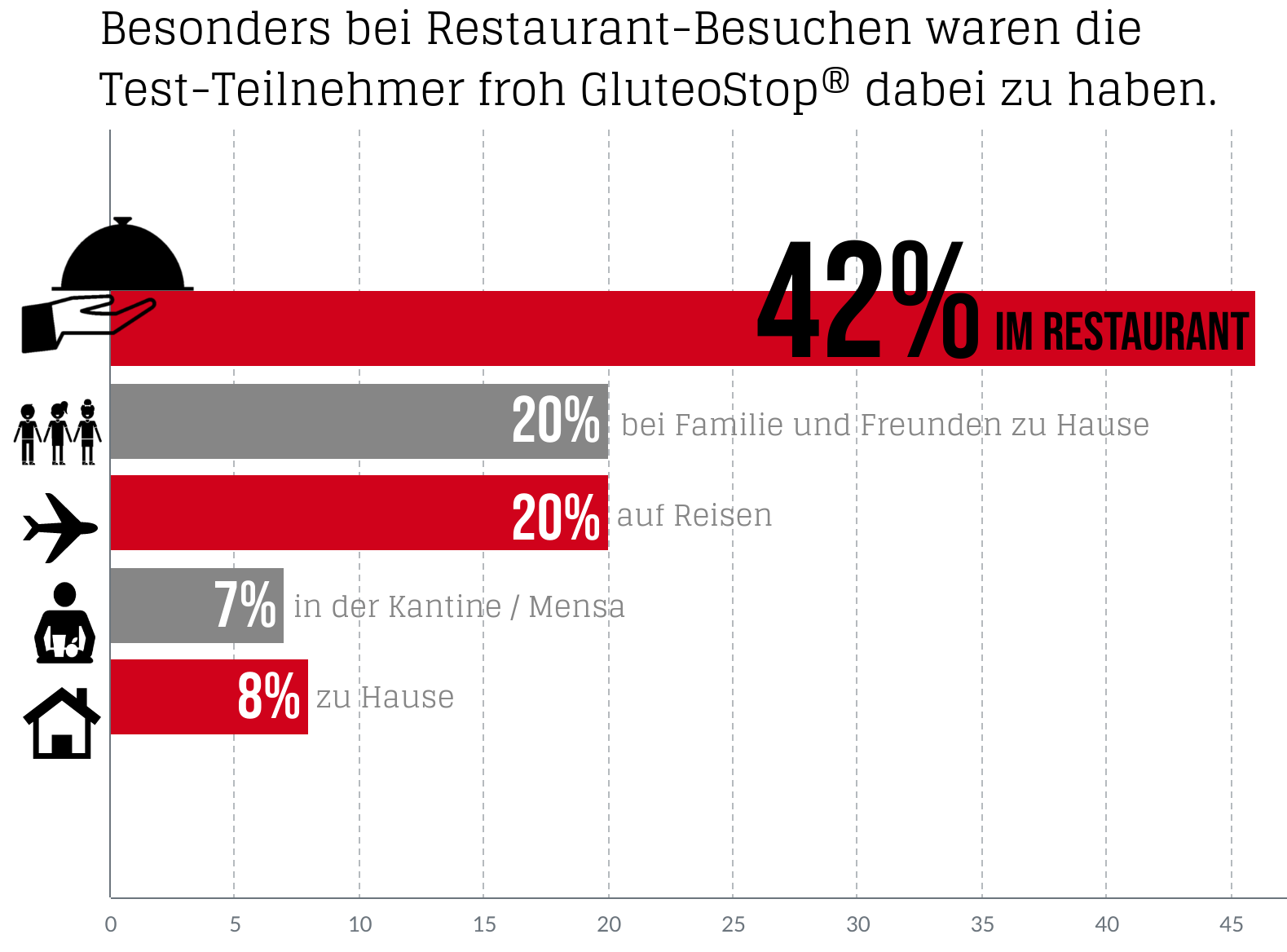
We developed GluteoStop® so that it can be carried anytime and anywhere and taken when needed. We wanted to know from the study participants where they were particularly glad to have GluteoStop® with them. As we expected, most stated that they were particularly glad to have GluteoStop® on hand when visiting restaurants. Especially celiac disease sufferers, with 51%, mentioned eating out at restaurants. "While traveling" and "with friends and family" followed in second and third place. However, we would like to emphasize again at this point that GluteoStop® is not a miracle cure and one should not be careless when choosing restaurants and dishes. A chef who does not know what gluten is or a kitchen that does not meet the basic requirements for gluten-free preparation should be avoided. It is best to inquire about possible restaurants in advance. You can also find great recommendations for some cities in our blog.
10) Would you buy GluteoStop®?
92% of the gluten-sensitive product testers would buy GluteoStop®. That's 9 out of 10 subjects from this group. Across all participants, we reached a phenomenal 87%. This is an outstanding result, and we are very proud. The price, in addition to the effect, is the decisive factor in whether a dietary supplement is purchased. With a recommendation rate of 92%, you confirm what studies have long proven - GluteoStop® works! Of course, one can always ask whether the price of a product is justified. For us, the quality of GluteoStop® is paramount, and we do not want to compromise here. Unfortunately, a high quality standard is also associated with high costs. GluteoStop® is manufactured in Germany. The enzyme we use is produced in France by one of the world's most renowned enzyme manufacturers. In addition, we only use high-quality excipients for tablet production. Instead of animal magnesium stearates, for example, we use calcium salts of fatty acids from certified sunflower oil. Each batch is examined by external laboratories, as we do not compromise on quality assurance. As a German medium-sized company, we are convinced that in the end, product quality is more important and should not be skimped on.

The test results confirm that with GluteoStop®, we have launched an innovative product that can help many people make their everyday lives easier despite gluten intolerance and improve their quality of life. If you want to convince yourself of GluteoStop®, you can find GluteoStop® in packs of 30 and 90 in almost all pharmacies in Germany or at www.gluteostop.com. You can also get GluteoStop® in Switzerland, Denmark, Norway, Sweden, Romania, Slovenia, and Lithuania. More countries will be added soon.


Share:
Our Top 6 Gluten-Free Salad Toppings
Gluten-free Flour Alternatives