

NO MORE BORING SALADS!
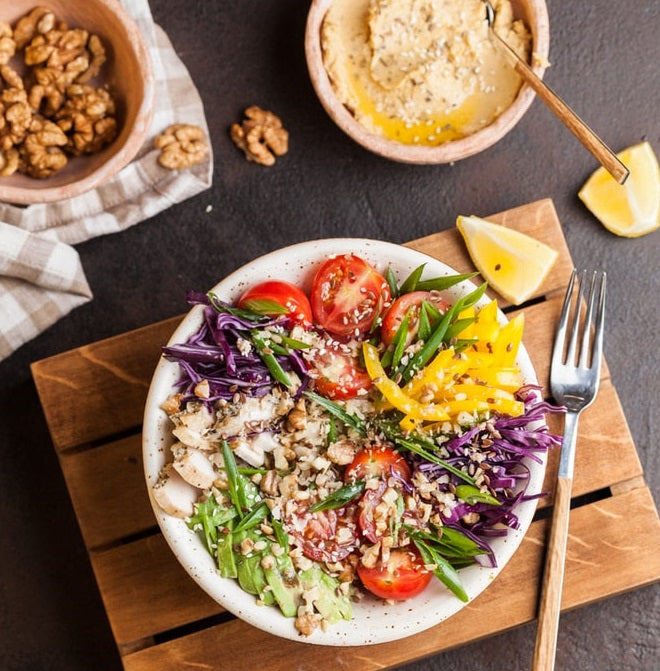
There are many ways to jazz up salads to make them tasty and satisfying. Here are some of our favorite ways to create a hearty and gluten-free salad!
1. GLUTEN-FREE WHOLE GRAINS
There is a wide range of gluten-free whole grains to choose from. Quinoa is a popular choice nowadays because it contains a lot of fiber, minerals, and protein (it actually contains all the essential amino acids we need, just like animal sources) and because it is also quite tasty.
You can also use cooked buckwheat, brown rice, wild rice, and millet. Most gluten-free whole grains have a nutty, firm taste and a good portion of protein. They also contain stress-reducing and energy-boosting B vitamins such as B1 (thiamine), B5 (pantothenic acid), and B6 (pyridoxine).
Try peach quinoa salad with asparagus and candied walnuts.
2. LEGUMES
Like many whole grains, legumes are a wonderful source of protein. They are rich in fiber, which can help support our digestion, keep our blood sugar levels stable, and lower cholesterol. Beans, peas, and lentils are generally rich in iron. Some darker beans, like black beans, also have a high content of antioxidants (like polyphenols and carotenoids) and anti-inflammatory nutrients - so it's not just vegetables that fight free radicals.
Chickpeas are always a popular option, but lentils, kidney beans, white beans, mung beans, and soybeans are also good choices.
3. NUTS AND SEEDS
Nuts and seeds are a great addition to salads (if you are not allergic to nuts). Fancy an extra kick? Try making seasoned or candied nuts yourself for an extra burst of flavor.
Any type of nuts or seeds will do - walnuts and almonds offer healthy fats and a large amount of minerals, as do various plant seeds. However, these are usually much cheaper. Locally grown flax, hemp, or psyllium seeds are particularly suitable.
4. TOFU, TEMPEH, OR ANIMAL PROTEIN
If you are vegetarian or vegan, try using tofu or tempeh (tempeh is made from fermented soybeans) in your salad. Tofu and tempeh readily absorb flavor, so you can marinate them with your favorite sauce or dressing and then bake or stir-fry them.
If that's too much effort, there are also pre-flavored options available in stores, such as smoked tofu.
For non-vegetarian guests, baked salmon or chicken are also classic and very popular salad toppers.
5. ROASTED VEGETABLES
Who says salads have to contain raw vegetables? A simple Caprese salad tastes good in summer, but if it's winter, cooked vegetables are a popular alternative.
Roasted pumpkin, sweet potatoes, beets, parsnips, carrots, mushrooms, bell peppers, cauliflower, caramelized onions, take your pick - all of these are great and healthy ingredients. You can keep it simple and roast your vegetables with just olive oil and sea salt, or add more spices and herbs for extra flavor.
6. A RICH SALAD DRESSING
A rich, healthy salad dressing can take your salad to the next level. Nut and seed butters like tahini, almond, and peanut butter offer substance and flavor, as do dips or sauces like hummus, babaganoush, guacamole, or salsa. You can also mix cooked vegetables into your dressings.
We hope you have fun jazzing up and enjoying your own creative salad variations!

Share:
Gluten-Free Essentials
9 out of 10 testers say "yes" to GluteoStop!